comparison
Per Cut Billing vs Equal Monthly Payments for Mowing Routes
Per cut invoices track the work exactly. Equal monthly billing smooths winter payroll and holds customers through slow growth weeks. This compares cash flow, disputes, collections and bookkeeping for both.

What Each Model Actually Puts on the Invoice
Per cut billing is the classic way most small lawn care companies started. The invoice lists every visit, with a price next to each one, and a total at the bottom for the period. If you mow the yard six times in April, the invoice shows six line items or a single line with six cuts. Skip a week when grass is slow, and the invoice is lower. Double up after a rainy stretch, and the charge reflects the extra work or extra time on site. Customers see what they paid for, visit by visit.
Equal monthly payments, sometimes called "budget billing" or "seasonal flat rate," change the invoice. Instead of tracking each visit, the invoice shows a fixed amount every month, regardless of whether you mowed three times or five. The bill might mention that it covers all mowing for the month, but the price is the same each cycle. This model spreads the cost of the entire season into even payments, smoothing out the peaks and valleys.
Under the hood, both models expect you to track visits for your own records, but only the per cut approach tells your customer exactly how many times you came. The equal payment model relies on trust or a preseason agreement about what is included. Some shops send a summary at year end, but the monthly bills do not show visits.
Keep reading: Eight Routing Mistakes That Add an Hour to Every Mowing Day
Cash Flow Across a Nine Month Growing Season
Cash flow is the main concern for most owners, especially in any business with seasonality. Under the per cut model, cash comes in waves. In peak May and June, when grass grows fast, invoices can run high. In dry July or October, when you might only mow two or three times, the bills get thin. Crews still want regular hours, but income falls off.
With equal monthly payments, cash flow steadies out. You know each customer will pay the same amount from March or April through November or December, depending on your growing region. This helps keep payroll steady. The risk is frontloading work in spring, with heavy cutting before payments catch up, but by midsummer, income and expenses even out.
Many owners with several crews find that steady billing lets them project revenue and make hiring decisions with less guesswork. Crews can sometimes stay full time beyond the peak, since cash continues even as visits drop. For the single crew shop, the per cut model matches cash to work, which feels safer in lean years.
Who Absorbs the Drought Week and Who Absorbs the Double Cut
Weather is the wild card every season. In a per cut setup, you and the customer share the risk. If drought hits and you skip a week, they pay less and you earn less. If you have to double cut or bag heavy clippings after a week of rain, you can bill more, either as an extra visit or as an upcharge for extra work. The customer sees the cost directly.
In the equal monthly payment model, you absorb most of the risk. If grass slows down and you skip a visit, you still get paid. In a wet stretch where you double cut or spend twice as long, there is no extra income unless you have a clause for heavy growth. Some contracts spell out a maximum number of visits or include a surcharge for special cases, but most customers expect the flat rate to cover it all.
This flips the incentive in dry or rainy years. With per cut, customers sometimes ask to skip service to save money. With flat rate, they may want every possible visit to get their money's worth. Your crew may get asked to "touch it up" even if it barely grew, and you have to set boundaries.
Some shops deal with this by writing a service cap into the contract, such as "up to 30 visits per season." Others include a clause for extra charges if growth is extreme. Most customers never read these details, so clear communication matters.
Keep reading: Applicator Licenses, Phosphorus Limits, and Turf Blackout Dates
Skips, Disputes, and the Calls You Get in August
Customer calls follow the billing model. On per cut invoicing, most complaints happen when a customer thinks you missed a week, double charged, or the yard "didn't need it." Sometimes a neighbor says their yard was skipped, or a customer claims the crew left early. You need good visit logs, especially if you want to win these disputes. GPS or time-stamped photos help, but most solo operators just rely on route sheets and memory.
Equal monthly payment brings a different pattern. Instead of "did you mow this week?" the call is "why are you here if it didn't need it?" or "shouldn't you come more when it's raining?" Some customers feel shortchanged in dry spells, asking for extra edging, weeding, or even hand watering since they are paying anyway. In wet spells, you may get pushback if you skip a week due to soaked turf but still send a bill.
Disputes under the per cut model are about the invoice details. Disputes under equal payments are about service expectations. Both require clear preseason agreements and a way to show what was done each week. Some shops use route management software to log every visit and note skipped weeks for weather, which cuts down on he-said-she-said calls in late summer.
Card Declines, ACH, and Chasing the Last Invoice of the Year
Collections are a headache in any service business, but the billing model shapes when and how often you face them. Under per cut billing, customers may pay each invoice as it comes, usually monthly or at the end of the season. If they fall behind, you might carry a growing balance into late fall, sometimes losing out entirely if a customer disappears after the last cut. Chasing payment after the work is done is never fun.
Flat monthly billing makes recurring card or ACH payments much easier. Most equal payment shops require a card on file or bank draft, and many set up automatic charges on the first of each month. This cuts down on late payments and collections. The risk is that if a card declines for two or three months, you may not notice until the balance is much higher than a single invoice. ACH returns can also lag in notification.
Some customers want to pay by check even on equal monthly billing. Tracking these payments takes discipline. If you let a few checks slip past, you may not spot a nonpayer until the season ends. Many owners find that automating card and ACH payments is the only way to make flat billing work at scale.
At season's end, per cut shops often face the "last invoice" problem: a customer bails on the final month and you eat the cost. With equal payments, the risk is a customer quitting after heavy spring mowing but before paying enough to cover those early visits. Some shops charge a higher first payment or require a deposit to guard against this.
See how MowSeason handles this for landscaping and lawn care
Deferred Revenue: What Your Bookkeeper Needs at Year End
Accounting changes with the billing approach. For per cut billing, revenue matches work performed. You cut, you bill, you recognize income. There is no deferred revenue, and bookkeeping stays simple. Each invoice stands alone, and your year-end numbers line up with what you physically did.
Equal monthly payment introduces deferred revenue. If you collect money in March and April but mow more visits in those months than the payments cover, your books technically show you owe the customer service you have not delivered yet. The reverse happens in fall, when the season slows but you still receive monthly payments.
Your bookkeeper needs to track how much service has been provided versus how much has been billed and collected. This usually means moving some payments into a "deferred revenue" account, releasing the income as you complete visits. Most small shops do not do this strictly, but accountants will remind you about it if you ever borrow money or sell the business.
For tax purposes, most single owner shops use cash accounting and simply report what comes in. If you grow to three or more crews and run equal payments, it is worth talking to your accountant about deferred revenue rules. Many route management tools now include reporting on completed versus scheduled visits, which simplifies these calculations.
Which Model Fits a One Crew Shop and Which Fits Six
Shop size shapes which billing method works best. A single crew owner, especially one handling the work and the billing solo, often prefers per cut invoicing. It matches payment to work done, fits with customers who want to see exactly what they are paying for, and keeps disputes straightforward. The paperwork is lighter, and if you lose a customer midseason, you are not left holding the bag for unpaid cuts.
As you add crews and routes, the balance shifts. Equal monthly payments start to make sense, especially if you want steady payroll, more predictable cash flow, and the ability to offer benefits or year-round employment. With more customers, streamlining collections and reducing invoice disputes saves hours each month. The risk of frontloading work in spring is spread across a larger base, and software can track visits and payments by route automatically.
Flat rate billing also appeals to commercial clients and HOAs, who expect steady invoices and want to budget for the whole year. If you plan to expand into these markets, getting comfortable with equal payments early can help you scale.
Whether you are solo or running half a dozen crews, the right system makes the difference. Route and billing software that handles seasonal packages, recurring schedules, and weather-based adjustments can take away most of the friction. The heavy lifting in billing, scheduling, and payment tracking is now handled by tools like MowSeason, freeing you to focus on growth and service quality.
Read also
Three more reports from The Cut List on the same working season.
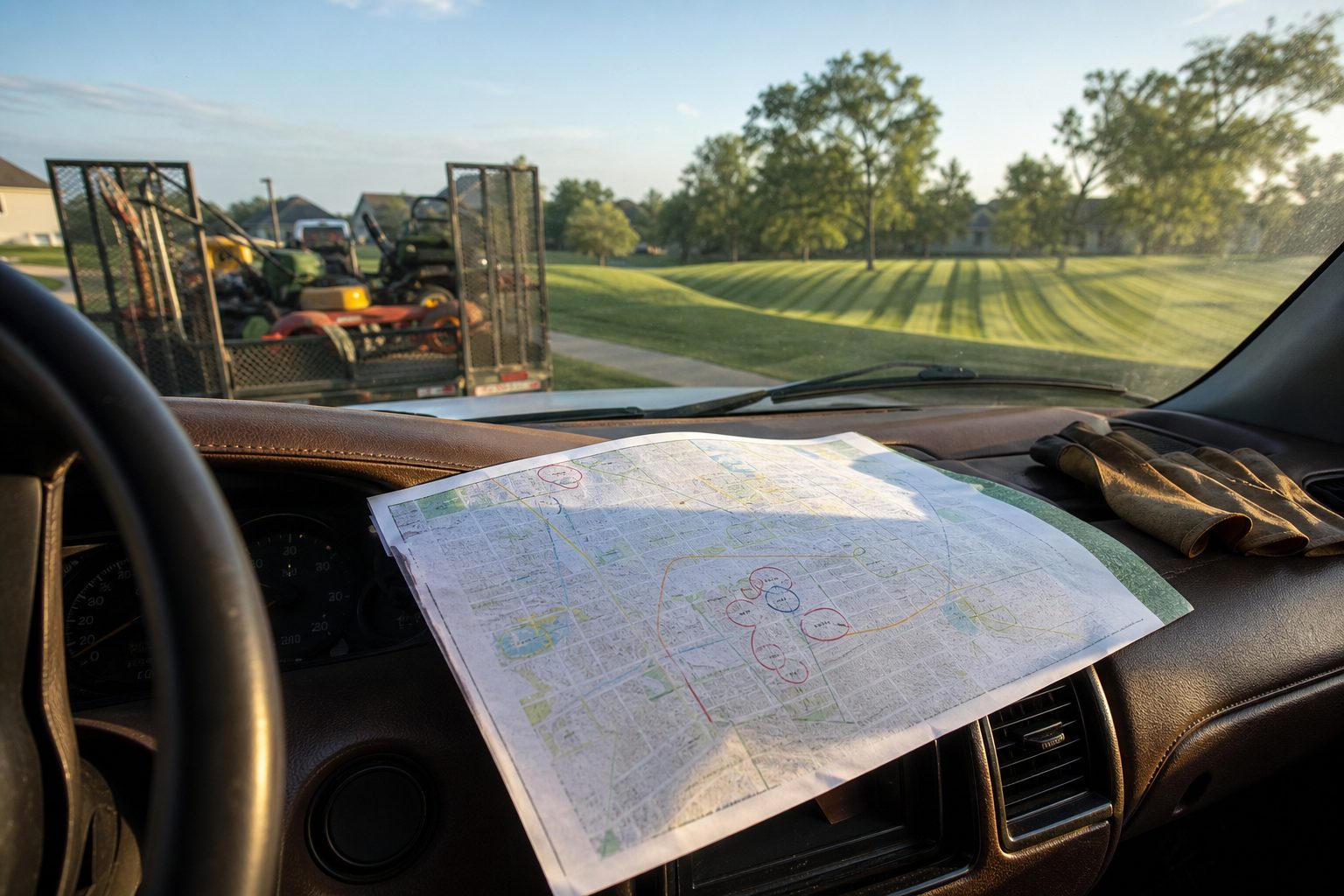
Eight Routing Mistakes That Add an Hour to Every Mowing Day
Windshield time is the cheapest hour to recover and the easiest to waste. These are the eight route and scheduling habits that quietly stretch a mowing day, with the fix for each one.

Applicator Licenses, Phosphorus Limits, and Turf Blackout Dates
Turf work sits under federal pesticide law and a stack of state fertilizer statutes. Here is what certification, product labels, posted notice, seasonal windows and record keeping actually require of a small crew.

How a Three Crew Shop Sold Its Whole Mowing Season by March 1
A three crew operation stopped chasing spring phone calls and worked a fixed outreach calendar from November to March. This walks through the list sorting, the offers, the deposits and the weeks that decided the season.