mistakes to avoid
Eight Routing Mistakes That Add an Hour to Every Mowing Day
Windshield time is the cheapest hour to recover and the easiest to waste. These are the eight route and scheduling habits that quietly stretch a mowing day, with the fix for each one.
Selling Any Address in Any Town on Any Day of the Week
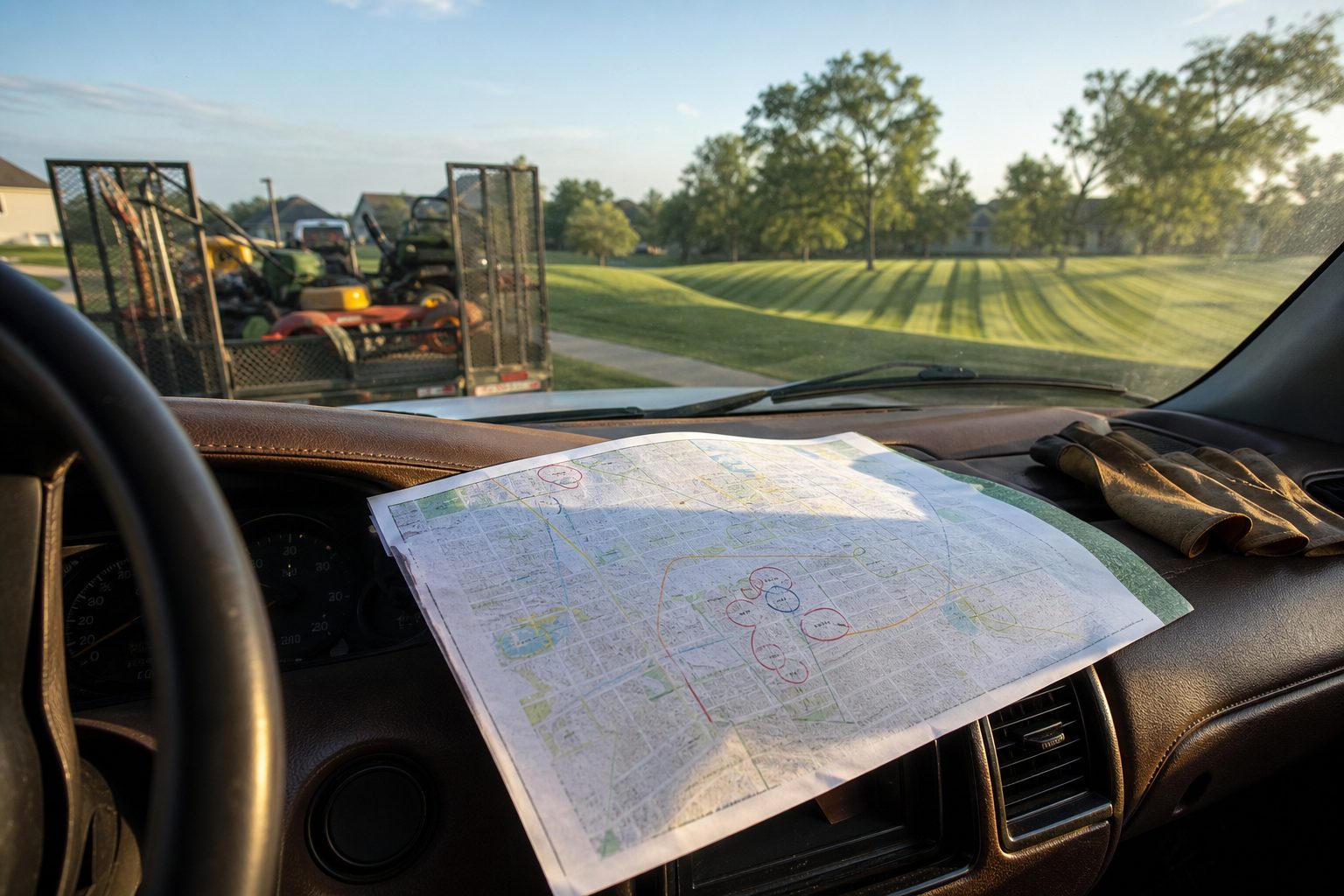
Route density is the backbone of a profitable mowing operation. When the office books jobs wherever and whenever customers ask, it guarantees long drives, scattered stops, and wasted time. The problem grows with every new client outside the usual area, especially when they're assigned a random service day.
The urge to say yes to every call is strong, especially early in the season. But each outlier address breaks the route pattern for the whole crew. Ten minutes extra on a single job, multiplied by every visit in a season, piles up fast.
The fix: Set clear service zones and stick to them. Assign specific days for each town or neighborhood. Group new sales by proximity, not by when the customer first calls in. This lets you fill the route block by block, not mile by mile.
Keep reading: Applicator Licenses, Phosphorus Limits, and Turf Blackout Dates
Building the Route in the Order Customers Signed Up
Many route sheets are built from the top of the customer list to the bottom, just as names are entered. This leads to random sequencing, with crews zigzagging back and forth instead of following a logical path. Even a few miles of unnecessary backtracking can cost an hour over a full day's work, especially in traffic-heavy areas.
There's also the hidden cost of mental fatigue for crews forced to constantly check addresses or double back across town. A disorganized sequence means more starts and stops, more U-turns, and more time spent navigating instead of working.
The fix: Reorder every day's stops based on the most efficient loop or line. Use a map or routing software to visualize the path. If you need to print route sheets, arrange them in the order crews should visit. As the business grows, review and update the sequence regularly to reflect new clients and dropped accounts.
Ignoring Gate Width Until the Crew Is Already in the Driveway
A too-narrow gate can turn a job from routine to a headache. When the mower won't fit, the crew has to unload smaller equipment, make extra passes, or sometimes haul everything by hand. This adds minutes at a minimum and risks damaging both equipment and property when crews try to squeeze through anyway.
This mistake is common when customer intake skips the gate question. It's easy to assume every property matches the gear on the trailer, until the crew ends up staring at a thirty-two inch gate with a forty-eight inch mower. That lost time compounds across the season.
The fix: Always ask about gate width during the sales call or estimate. Record it on the work order. If the mower won't fit, plan to send the right-sized machine, or quote for extra labor time. Flag tight gates on the route sheet and train crews to check before unloading. This saves time and builds trust with customers who notice careful planning.
Keep reading: How a Three Crew Shop Sold Its Whole Mowing Season by March 1
Putting the Long Drive at the End of the Day Instead of the Start
Many crews tackle their closest jobs first, leaving the outlier for last. This feels logical when everyone is fresh in the morning. But by late afternoon, traffic builds, fatigue sets in, and a drive that took ten minutes at 8 AM can take thirty at 4 PM. If the big drive is the last job, crews push to finish fast, leading to rushed work or mistakes.
The fix: Start the day with the longest jump while traffic is light and energy is high. Build the route back toward the shop or home base. This keeps the heavy drive predictable and ends the day closer to home. If traffic patterns vary, check local rush hour windows and adjust accordingly. Small shifts can recover big chunks of wasted time each week.
Letting Every Skip Request Land on a Different Day
Customers sometimes ask to push their mow back a day, skip a week, or reschedule after rain. If these skips are filled in one by one, the route turns into a patchwork of odd stops. The result: crews double back to the same area on different days, or find themselves with a single job way out of the way.
Over a season, these accommodations break down the route's efficiency. Instead of grouping jobs by neighborhood, the schedule becomes driven by individual requests. It is tempting to keep every customer happy, but it comes at the cost of longer days and more fuel.
The fix: When a skip or reschedule comes in, batch the changes. Move other jobs in the same area to fill the gap, or hold the skip until the next regular service day for that group. If a customer wants to change their day permanently, offer only the days when you're already nearby. This keeps the route tight and reduces isolated stops.
See how MowSeason handles this for landscaping and lawn care
Running Trimmer and Blower Work With No Assigned Crew Positions
When every worker grabs whatever tool is free, crews lose time on handoffs and duplicate effort. If one person starts trimming in the backyard while another grabs the blower for the front, they bump into each other or skip areas by mistake. At the next stop, the scramble repeats.
Job roles set on the fly may seem flexible, but they actually slow the team down. Workers have to communicate more, check each other's work, and wait for equipment to become available. On multi-crew days, this adds up.
The fix: Assign fixed roles at the start of the day: one operator mows, another trims, the third blows off hard surfaces. Rotate tasks by week if needed. With clear positions, everyone knows their lane, and each job finishes faster. This also makes it easier to spot when a task is running behind or needs extra hands.
Never Timing a Property After the First Visit
Many shops time a lawn on the first service, but rarely check again. Properties change: grass grows faster in some months, tree debris adds work, or new landscaping adds obstacles. If you trust the old time estimate, overages creep in week after week. Small overruns are hard to spot unless you measure them.
Without real data, it's hard to know whether a property is still profitable or needs a price adjustment. Crews also get frustrated when a job always runs long and puts pressure on the rest of the day.
The fix: Spot-check property times several times a season, especially after big weather events or visible changes. Keep a log on the route sheet or in your software. If a job habitually overruns, flag it for a price review or a service adjustment. This keeps the numbers honest and avoids surprises at season's end.
Rebuilding the Route Only After a Crew Member Quits
Most owners do not rethink their routes unless something forces the issue: a crew member leaves, a truck breaks down, or business drops. Until then, routes grow messy as new jobs are added and old ones are dropped. This slow drift can cost as much time as a lost employee, especially as density drops.
Waiting for a crisis to clean up the route locks in wasted hours and extra miles. Meanwhile, overtime creeps up and crews burn out on long days that could be shorter with a little planning.
The fix: Review and rebuild routes at least twice each season, not just after a disruption. Look for clusters that could be tighter, days that could swap stops, and isolated jobs that do not fit. With regular updates, you can keep the route lean and absorb changes more smoothly when they come.
Modern tools help make this process easier. The right software can sort jobs by location, handle recurring schedules, and adjust routes quickly when weather or skips throw off the plan. For companies selling seasonal packages and managing shifting schedules, a dedicated platform lets you get back those wasted hours before they add up.
Read also
Three more reports from The Cut List on the same working season.

Applicator Licenses, Phosphorus Limits, and Turf Blackout Dates
Turf work sits under federal pesticide law and a stack of state fertilizer statutes. Here is what certification, product labels, posted notice, seasonal windows and record keeping actually require of a small crew.

How a Three Crew Shop Sold Its Whole Mowing Season by March 1
A three crew operation stopped chasing spring phone calls and worked a fixed outreach calendar from November to March. This walks through the list sorting, the offers, the deposits and the weeks that decided the season.

Mulch Estimating by the Numbers: Yards, Depth, and Crew Hours
One cubic yard covers 162 square feet at two inches deep and 108 square feet at three. Those two numbers drive bed measurement, truck loads, install hours and the price you quote for a spring mulch route.