trends and outlook
How Blower Bans, Labor Caps, and Watering Rules Change Mowing Work
Three pressures are rewriting the season: municipal gas equipment ordinances, a fixed federal cap on seasonal visas, and drought rules that shrink irrigated turf. Here is what each one changes on the schedule.
Municipal Blower Ordinances: Hours, Seasons, and Outright Bans
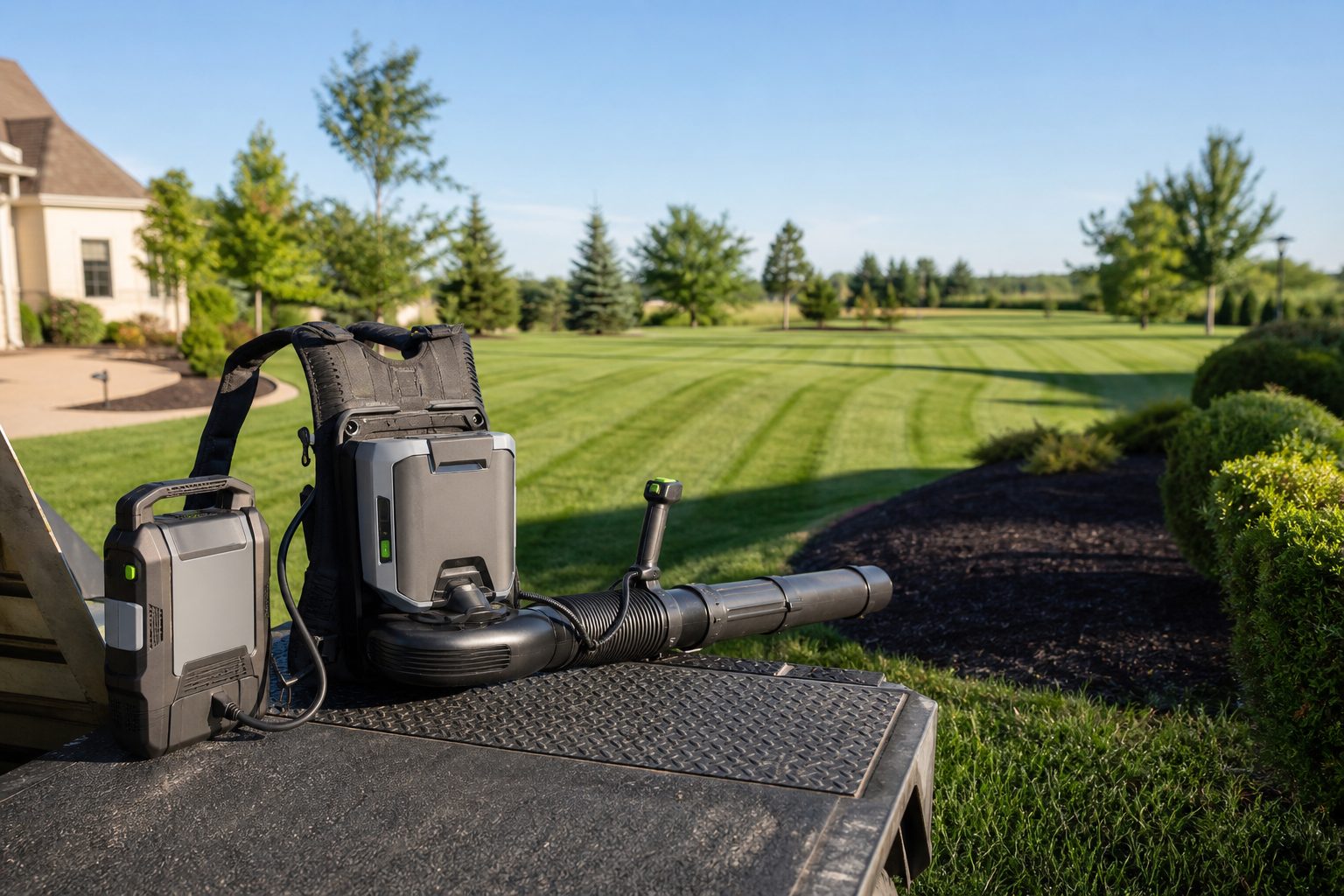
Across the country, local governments are pushing new rules for gas-powered leaf blowers. Most start with limits on the hours crews can run blowers, often banning early morning or late evening use. Some neighborhoods allow gas blowers only mid-morning to mid-afternoon, usually to reduce noise complaints.
In certain cities, seasonal bans come into play. These restrict gas blower use during summer months, when dust and ozone warnings are most common, or during fall cleanup, a busy time for leaf removal. Several municipalities have moved past partial bans to outright prohibition of gas blowers, regardless of season or task. In those places, only electric blowers or manual tools are allowed.
Enforcement varies. In some towns, code officers respond to neighbor complaints with warnings at first, then fines for repeat offenses. In others, police may ticket on sight. Many shop owners now keep a patchwork calendar by zip code, since crossing a city line can mean a different set of rules and potential penalties. The result is more planning just to send out a crew with the right tools at the right time.
Keep reading: How to Price a Season Long Mowing and Cleanup Package
California's Small Off Road Engine Rule and Why It Travels
California's rule on small off-road engines, known as SORE, is now the strictest in the country. The rule phases out new sales of most gas-powered handheld and lawn equipment, including blowers, trimmers, and mowers under a certain horsepower. As of the current compliance date, retailers in California cannot sell new gas models covered by the rule. This covers both professional and residential-grade machines.
Many manufacturers do not make a California-only version of their product. Instead, they update their entire catalog to meet the toughest standard, which means the California rule can set the bar for the rest of the country. Other states, especially in the Northeast, often follow California's lead within a few years. Some local governments outside California have adopted similar sales restrictions or fleet conversion deadlines. For the lawn care business, this means planning for electric equipment is not just a California issue, but a national trend.
Shops in neighboring states report supply chain changes as well. Wholesalers may stop carrying certain gas models, or inventory can get redirected to states without bans. This affects fleet replacement cycles and the availability of repair parts. The shift is slow but steady: crews in many states see fewer gas options every year.
Battery Fleets: Run Time, Charging Logistics, and Replacement Cost
Switching from gas to battery-powered blowers and mowers brings a different set of headaches. The first is run time. Most commercial-grade battery blowers can run at full power for less than an hour per battery. That means crews need to carry multiple charged batteries to get through a day, especially in the heavy leaf season or on large commercial sites.
Charging logistics come next. Some companies install wall racks of chargers in the shop and rotate batteries each evening. Others invest in portable charging stations that fit in trailers or vans, powered by generators or solar panels. Each approach takes up space and adds labor. Crew leads spend time tracking which batteries are charged and which need rotation. Forgetting to plug in overnight can mean lost hours the next morning.
Replacement cost is another factor. While electric equipment requires less engine maintenance, high-capacity batteries wear out in two to four years, depending on use and charging habits. Replacement batteries are a major expense, and shops must budget for ongoing turnover. The initial cost for a battery fleet can be two or three times higher than for gas tools, and owners need to track battery health to avoid sudden failures in the middle of a route.
Finally, some operators report reliability differences in cold or wet weather. Rain and heavy dew can shorten battery life. Freezing temperatures may reduce power or cause tools to shut down. These are manageable, but crews need backup plans for days when the batteries do not perform as expected.
Keep reading: Per Cut Billing vs Equal Monthly Payments for Mowing Routes
The H-2B Cap and How the Two Halves of the Year Are Allocated
The H-2B visa program lets landscaping businesses hire seasonal workers from abroad, but the number of visas available is capped at a fixed national total each fiscal year. The government splits this cap in half: one portion becomes available for workers whose employment starts in the first half of the year, and the other for the second half. This affects how and when companies can bring on seasonal help.
Demand far exceeds the available slots, especially in spring. Shops that depend on H-2B labor must plan their application timing down to the day. Missing the first-come, first-served window can mean going without needed workers for an entire season. The "lottery" system for applications adds another layer of uncertainty. Some companies get all the workers they request, while others get none, making it hard to commit to long-term contracts with customers.
This split in allocation also means that, in most years, more companies end up short-handed in the early growing season. Spring cleanup and the first mow cycles often require overtime from existing crews, or managers have to turn down new business. In the second half of the year, some shops may bring on H-2B workers just in time for the slower fall or winter service schedule, which is not always ideal for labor needs or cash flow.
Domestic Hiring, Wage Floors, and Shorter Crew Days
With limits on H-2B visas, many operators turn to local hiring. This brings its own set of costs and rules. In most regions, wage rates for entry-level labor have risen in the past few years, driven by competition from construction, warehouse, and delivery jobs. Many states and cities have raised minimum wages, and some require overtime pay after eight hours a day.
Hiring from the local labor pool also means more turnover. Seasonal work in lawn care is hard, hot, and often unpredictable. Crews built from local hires may shrink or fluctuate, especially in the peak of summer. Office managers spend more time on onboarding and paperwork, and more money on training. Some owners prefer to build smaller, more experienced crews and pay higher hourly rates to keep them through the season.
Shorter crew days are becoming more common. With fewer workers available, companies reduce route sizes or spread work over more days. Overtime restrictions and labor laws push some shops to schedule four ten-hour days or staggered shifts rather than traditional five-day weeks. This can stretch out large jobs and requires careful scheduling to meet customer expectations, especially for commercial contracts with firm deadlines.
Wage pressures have also led to tighter route planning. Some owners increase minimum job size or set travel limits for certain accounts, focusing on the highest-margin work. Others raise prices or add fuel surcharges, hoping to retain enough clients to keep the business profitable while complying with new wage rules.
See how MowSeason handles this for landscaping and lawn care
Drought Restrictions, Turf Conversion, and Fewer Mow Cycles
Watering restrictions are on the rise, especially in the western and southern states. Many municipalities now limit irrigation days per week or set total water use caps for each property. This reduces how much turf can be kept green and growing through the summer, which in turn changes the mowing schedule.
As more customers let lawns go dormant or convert to drought-tolerant landscaping, the number of mow cycles per season drops. Some property managers ask for biweekly or monthly mowing instead of weekly. Others replace grass with mulch, gravel, or synthetic turf, cutting out mowing entirely. For many contractors, this means fewer visits per property and lower seasonal revenue from traditional mowing accounts.
Some companies respond by expanding into new services: irrigation repair, mulching, planting native species, or hardscaping. These jobs often have different crew needs and longer service intervals, which can make scheduling more complex. The trend toward turf reduction is long-term. In many regions, rebates or code changes push homeowners and commercial property managers to reduce lawn area each year.
One challenge is keeping route density high enough to stay profitable as traditional lawns shrink. Companies that rely on volume mowing must adapt their business model, maybe by combining mowing with other services or by shifting to commercial contracts where green space is still a priority.
Building a Season Package When Any of These Can Move
Putting together a seasonal service package has never been more complicated. Ordinances can change mid-year, affecting which tools are legal in each area. Labor availability is unpredictable, with federal visa caps and changing wage laws. Watering rules can cut service frequency on short notice. Many owners find themselves revising schedules, routes, and service menus every few months as new rules or shortages arrive.
Customers expect clear communication and consistent service. To manage this, many operators move toward recurring visit schedules with flexible service descriptions and built-in adjustment clauses. Some companies give clients a choice of visit plans, noting that frequency or type of service may shift if weather or regulations change. Others use software tools to automate route adjustments based on crew size, equipment availability, and local rules.
Forecasting labor needs, tool requirements, and customer preferences is now a rolling process. Owners who can quickly update their service packages and communicate those changes to clients are the ones who keep routes full and crews working. Tools that support recurring scheduling, route changes, and flexible service packages can help keep the operation on track as the ground keeps shifting.
Read also
Three more reports from The Cut List on the same working season.
How to Price a Season Long Mowing and Cleanup Package
A season package is a visit count, a mowing height policy, a mulch allowance and a cleanup window, priced off crew hour cost. Here is how to build one a homeowner can compare and sign in a single visit.

Per Cut Billing vs Equal Monthly Payments for Mowing Routes
Per cut invoices track the work exactly. Equal monthly billing smooths winter payroll and holds customers through slow growth weeks. This compares cash flow, disputes, collections and bookkeeping for both.
Eight Routing Mistakes That Add an Hour to Every Mowing Day
Windshield time is the cheapest hour to recover and the easiest to waste. These are the eight route and scheduling habits that quietly stretch a mowing day, with the fix for each one.