numbers and benchmarks
Mulch Estimating by the Numbers: Yards, Depth, and Crew Hours
One cubic yard covers 162 square feet at two inches deep and 108 square feet at three. Those two numbers drive bed measurement, truck loads, install hours and the price you quote for a spring mulch route.
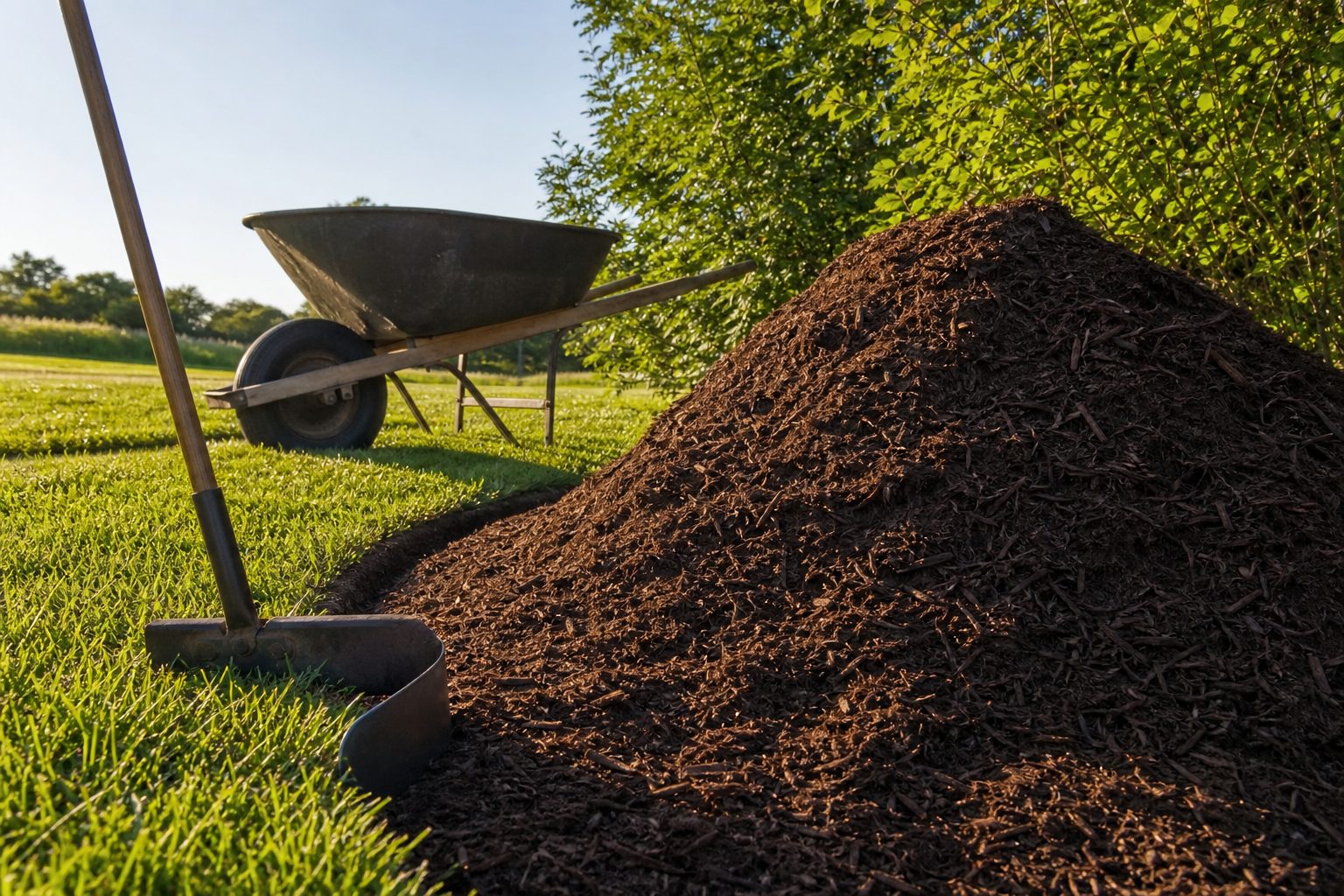
The Coverage Table Every Mulch Estimate Starts From
Every mulch job estimate hangs on a simple coverage calculation. One cubic yard covers 162 square feet at a two inch depth. At three inches, that same yard covers 108 square feet. These numbers come straight from basic math: a cubic yard equals 27 cubic feet, so dividing by the depth in feet gives you the coverage area. It is the reason you see these numbers on every estimate form and mulch calculator.
Most commercial beds call for a two or three inch depth. Mulch color and product choice rarely change the math, shredded hardwood or pine nuggets, the coverage per yard stays close. If you go thinner than two inches, you risk patchy coverage, poor weed suppression, and customer callbacks. Go thicker than three, and you waste material and risk smothering some perennials.
Crews rely on this coverage table for the whole route. When you know your square footage and your required depth, the yardage almost calculates itself. For example, a 1,000 square foot property at two inches will need just over six yards of mulch. When you get into large installs, that difference of one inch in depth can swing the job cost by a full pallet.
Keep reading: A Rain Week on the Route: Recovering Four Lost Mowing Days
Measuring Curved Beds Without a Site Plan
Most residential beds are not perfect rectangles. Curves, islands, and odd shapes are the rule, not the exception. Without a landscape plan to work from, getting an accurate square footage means hitting the ground with a tape or a measuring wheel.
Breaking Beds Into Shapes
The fastest method is to break the bed into chunks you can measure as rectangles, triangles, or circles. Measure the longest straight edge and the average width. For kidney-shaped beds, measure the length and the widest point, then the narrowest. Average the widths for your calculation.
For ovals or arcs, use the longest length and the maximum width. Multiply, then multiply by 0.8 to account for the lost corners and odd shapes. If the bed is a full circle, use 3.14 times the radius squared.
Measuring on the Fly
A measuring wheel saves time on larger beds or open sites. Walk the edge to get the perimeter, then pace out average width every few feet. Multiply perimeter by width, then divide by the number of sample widths you took. This is less precise, but gets you within ten percent for most residential jobs.
Take photos before and after measuring. This protects you if the customer adds or subtracts beds after the quote. On recurring routes, note any annual changes so you stay accurate each spring.
Choosing Depth: Refresh Layer Versus First Installation
Depth is not just a customer preference; it comes down to biology and appearance. A first install or a full bed renovation usually takes three inches. This buries weeds, keeps moisture in, and gives that deep, uniform color customers want.
For a refresh, especially if some mulch remains in good shape, two inches is often enough. Over-mulching year after year leads to compaction and root problems. Most maintenance contracts schedule a full install every other year, with refreshes in between.
Factors Affecting Depth Needs
- If the bed is bare dirt, never go less than three inches.
- If last year's mulch is mostly decomposed, treat it as a first install.
- If the bed gets heavy foot traffic or is sloped, stick to three inches to reduce erosion.
- For mostly decorative beds with shrubs or trees, you can get by with less on a refresh, but never below two inches.
Customers sometimes ask about going to four inches or more, thinking it will mean fewer weeds. Explain that too much mulch can suffocate plants and invite fungus. The main thing is consistent coverage, not excess depth.
Keep reading: Spring Startup Checklist Before the First Cut of the Season
Bulk Yards Versus Bagged: Loads, Handling, and Delivery Fees
Bulk mulch and bagged mulch each have their place, but the numbers change how you price the job. Bulk mulch is delivered in loose piles, usually by the cubic yard. Bagged mulch is sold by the cubic foot, most often in two cubic foot bags.
Bulk Mulch: The Route Workhorse
Bulk orders make sense for most installs over three yards. You avoid the plastic waste, lower your per-yard cost, and reduce the time spent cutting and hauling bags. Dump trucks or trailers can carry anywhere from 10 to 20 yards, depending on the setup.
Delivery fees for bulk mulch are usually charged by distance or flat rate per load. Plan routes so you get a full load delivered as close to the first drop as possible. That saves deadhead time and keeps the crew moving.
Bagged Mulch: Niche Jobs and Tight Access
Bagged mulch costs more per yard, but shines in small jobs or gated yards where a wheelbarrow cannot go. If you need less than two yards, bags may be cheaper than paying a bulk delivery fee. The bags are easy to stack in a pickup or on a trailer, but the labor adds up, each two cubic foot bag weighs 40 to 50 pounds.
For mixed jobs, do not forget to factor bag disposal. Hauling away a truckload of plastic eats time, and some municipalities have disposal fees. Some shops use bagged mulch for touchups only, to avoid extra trips to the yard for small patches.
Wheelbarrow Distance and What It Does to Install Hours
The time it takes to move mulch from the drop site to each bed is the hidden cost that separates a profitable route from a break-even one. Wheelbarrow distance, how far each load must be hauled, can double or triple install hours on larger properties.
Short Hauls: Under 50 Feet
If the drop spot is close to the beds, one worker can move a full load every few minutes. For a standard six cubic foot wheelbarrow, it takes about five trips to move one cubic yard. On a tight site, two workers can place three yards in under an hour, including spread and light raking.
Medium Hauls: 50 to 150 Feet
The farther the crew has to push, the more trips eat into your man hours. Add two to five minutes per trip for every 50 extra feet. For a 100 foot haul, plan on time and labor nearly doubling. For most three yard jobs, what would be an hour's work near the truck can stretch to two or more hours with a long walk.
Long Hauls and Obstacles
Anything over 150 feet, or with stairs, slopes, or soft ground, slows the work. Plan for two or even three workers just to keep up with the material. For commercial sites, consider renting a mini loader or using a mulch blower for anything over 20 yards. The upfront cost pays off in reduced crew fatigue and faster install times.
Always ask the customer about access before quoting. Fences, pets, locked gates, or interior courtyards can turn a simple job into a logistical headache.
See how MowSeason handles this for landscaping and lawn care
Edging, Bed Prep, and Weed Pulling as Separate Line Items
Many customers expect mulch jobs to include edging, weed removal, or light bed prep, but each adds time and cost. Clear line items on your quote protect your margin and set clear expectations.
Edging
Edging a bed with a shovel or spade creates a clean line and prevents mulch washout. For new beds, this can take as long as mulching itself. On established beds, a quick touch-up may only add a few minutes per 10 feet of edge. Include this as a per-linear-foot charge or as a separate labor block.
Bed Prep
Raking out leaves, pulling annuals, or smoothing soil before mulching cuts down on future maintenance and keeps customers happy. Estimate bed prep as a time block, usually 15 to 30 minutes per 100 square feet, depending on the condition. If you run into thick leaf litter or debris, flag it as extra.
Weed Pulling
Hand pulling and spot spraying weeds is tedious but necessary. Some shops lump this into bed prep, but it deserves its own line if weeds are heavy. Plan for 20 to 30 minutes per 100 square feet if you are dealing with crabgrass, dandelions, or other tough weeds. Let the customer know that heavy infestations can add a day or more to a large install.
Never surprise a customer with extra charges after the fact. Itemize every step, and specify if the price includes haul off of debris and clippings.
Turning Yards and Crew Hours Into the Quoted Price
With all the measurements, depth choices, access challenges, and prep tasks in hand, the final quote comes down to materials plus labor. Materials are a fixed calculation: total square footage divided by coverage area per yard, rounded up, times your per-yard cost for bulk or bags.
Labor is more variable. Start with a base hours-per-yard figure for easy sites, usually one to 1.5 hours per yard for open, accessible beds with a short haul. Add time for extra hauling, bed prep, weed pulling, and edging. For tight access or long wheelbarrow runs, double or even triple the base labor estimate.
Factor in overhead: drive time, dump fees, fuel, and crew minimums. Many shops set a minimum charge, no matter how small the job, to account for setup and cleanup time. For seasonal packages, average the labor over several visits to keep per-visit pricing consistent.
Clear, detailed estimates keep customers happy and crews on track. Repeat jobs get easier when you log past measurements and actual install times. Tracking where estimates missed the mark, too many yards ordered, or too few hours bid, helps tighten future quotes.
Technology makes this process faster. Service management tools that bundle seasonal package sales, recurring schedules, and weather-adjusted route planning let you save time on every quote. When the same system tracks materials, labor, and access notes from year to year, it gets easier to bid jobs with confidence and run profitable routes, even as crew counts and customer lists grow.
Read also
Three more reports from The Cut List on the same working season.
A Rain Week on the Route: Recovering Four Lost Mowing Days
Four days of rain turns a five day route into a backlog of tall, wet grass. This is how crews sequence the catch up, protect saturated turf, and tell customers what is actually going to happen.
Spring Startup Checklist Before the First Cut of the Season
Blades, decks, trailer lights, insurance certificates and confirmed start dates all have to be ready in the same week. This is the pre season checklist in the order a small operation should work through it.
How Blower Bans, Labor Caps, and Watering Rules Change Mowing Work
Three pressures are rewriting the season: municipal gas equipment ordinances, a fixed federal cap on seasonal visas, and drought rules that shrink irrigated turf. Here is what each one changes on the schedule.