checklist
Spring Startup Checklist Before the First Cut of the Season
Blades, decks, trailer lights, insurance certificates and confirmed start dates all have to be ready in the same week. This is the pre season checklist in the order a small operation should work through it.
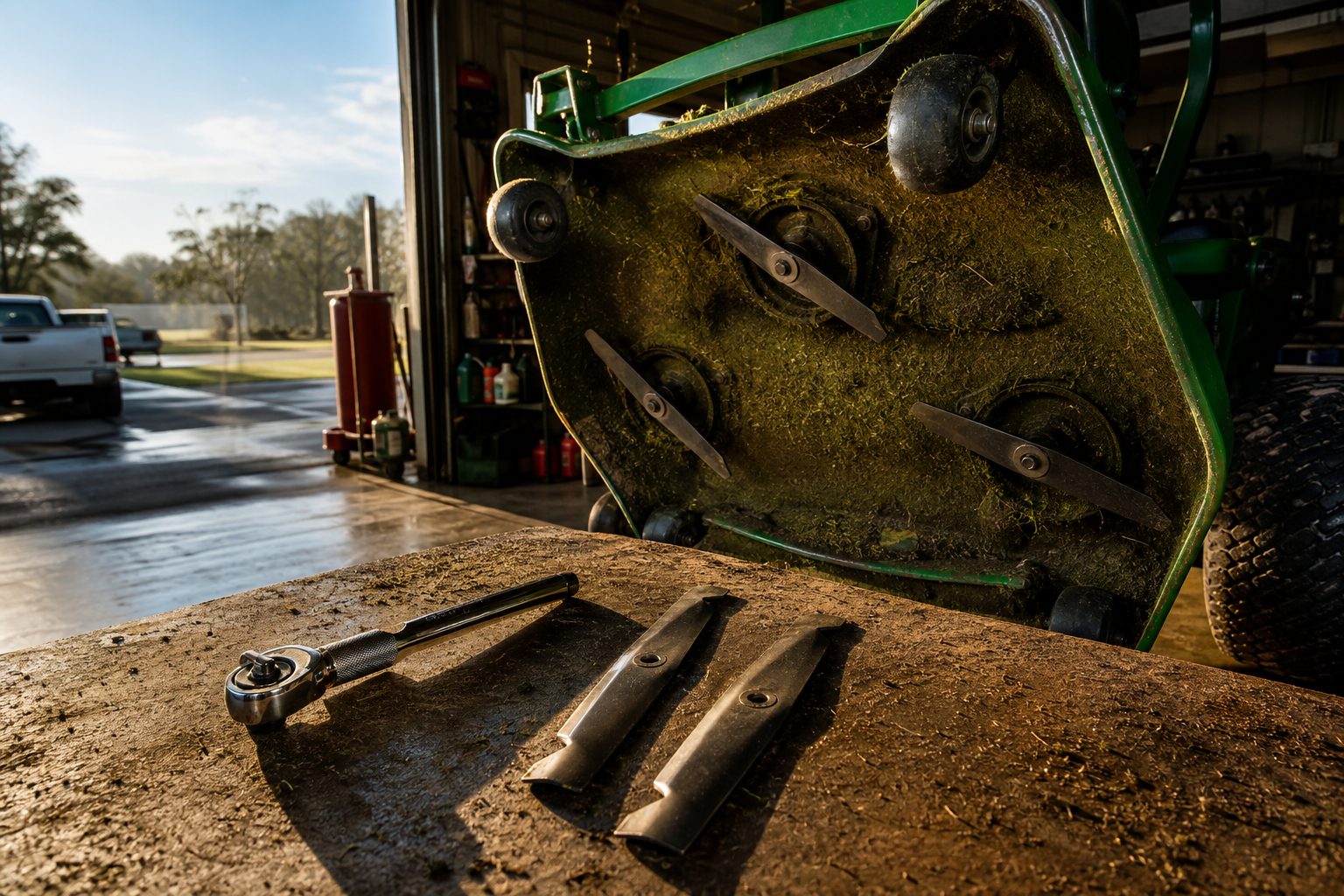
Six Weeks Out: Service Records, Parts Orders, and Blade Inventory
The first day your mowers hit the grass, every moving part should have been checked, oiled, and, if needed, replaced. Six weeks out, dig up last year's service logs for each machine. Look for patterns: common repairs, parts that failed, and blades that wore out early. If you do not keep digital records, start a habit this year. Even a simple notebook helps you see which units will need extra attention before the season starts.
Order filters, spark plugs, belts, and blades for each mower and trimmer. Inventory what you have on-hand. Many shops find themselves short on spindle assemblies or air filters after winter, especially if last year's orders were tight. Parts supply chains can run slow in spring, so do not wait until the week before your first jobs.
Now is also the time to send out repair work that you do not do in-house. If a zero-turn needs a hydrostatic drive rebuild, or if a compact tractor has a leaking cylinder, book that service now. Dealer shops fill up quickly in late March and April.
Keep reading: How Blower Bans, Labor Caps, and Watering Rules Change Mowing Work
Mower Decks: Leveling, Spindle Play, Belts, and Blade Balance
The deck does more than hold the blades. An uneven or loose deck will scalp lawns and leave a poor cut, which leads to callbacks and unhappy customers. Before you sharpen or install new blades, check the deck's side-to-side and front-to-back level. Use a tape measure to confirm the front of the deck is slightly lower than the rear, as most manufacturers recommend.
Spindle Play and Bearing Sound
Raise the deck and spin each blade by hand. Feel for roughness or play. Any side-to-side movement in the spindle likely means the bearings are worn. Listen for grinding or knocking as the blade turns. Replace noisy or loose spindles now, rather than mid-season.
Belts and Tension
Inspect all drive and deck belts for cracks, glaze, or fraying. Press the belt midway between pulleys: it should deflect about a half inch to an inch, but not feel loose. Replace any belt that looks dry or has more than a season's use if you are not sure of its age.
Blade Balance and Sharpness
After sharpening, hang each blade on a balance jig or a nail. Even a slight imbalance can shake the deck and wear out spindles. If the blade tips are uneven, grind or replace as needed. Dull or chipped blades tear grass instead of cutting, which leaves lawns brown and makes customers question your quality.
Trailer and Truck: Lights, Tires, Brakes, Chains, and Registration
Your crew cannot leave the lot if the trailer will not pass a roadside inspection. Start with the basics: plug in each trailer and test every running light, brake light, and turn signal. Replace burned out bulbs and check for corroded grounds. If lights are flickering, trace the wiring for pinched or broken insulation.
Walk the trailer and truck, checking tire tread and sidewalls for dry rot or cracks. Inflate to the right pressure and spin each tire to feel for roughness. Trailer tires age faster than you expect, and a blowout can cost a morning's work.
For trailers with electric brakes, listen for the actuator click and test with a brake controller. Inspect safety chains, breakaway cables, and the coupler latch. Every truck and trailer needs a current registration and a visible, legible license plate. Print new copies of registration and insurance for each vehicle.
Keep reading: How to Price a Season Long Mowing and Cleanup Package
Fuel, Batteries, and Two Stroke Equipment After Winter Storage
Fuel sitting in your cans or tanks since last fall can cause problems in spring. If there is any doubt, drain old fuel from mowers and hand tools. Modern ethanol blends separate and gum up carburetors. Use only fresh fuel when you fire up engines for the first time.
Check batteries in every piece of equipment. Cold weather drains cranking amps, and a weak battery might leave you stranded on the first jobsite. Charge or replace as needed. Clean corroded terminals with baking soda and a wire brush.
For two stroke blowers, trimmers, and edgers, empty any leftover fuel mix. Inspect fuel lines for cracking and primer bulbs for stickiness. Replace spark plugs if the engine was hard starting last year. Spray carburetor cleaner through the intake with the air filter off, then test-fire each tool. It is easier to fix a no-start in the shop than in a customer's yard.
Paperwork: Insurance Certificates, Applicator License, and W-9s
Commercial customers and HOAs often require a current certificate of insurance before you can set foot on their lawns. Contact your insurance agent and request updated certificates showing correct coverage limits. Keep digital and paper copies for fast proof.
If you apply fertilizer, pesticides, or herbicides, most states require a valid applicator license. Confirm that yours is current and renew early if it expires soon. For any new crew members who might apply chemicals this year, ensure that they have taken or are scheduled for the required training and testing.
Subcontractors and new clients may ask for a W-9 form. Print and fill out a current version for your company. Organize copies of vendor and client W-9s for your records, which makes tax season easier and avoids payment delays.
See how MowSeason handles this for landscaping and lawn care
Crew: Hiring Paperwork, Safety Training, and Route Assignments
Onboarding your crew takes more than a quick handshake. Gather and file all hiring paperwork for new and returning staff: I-9s with proper ID, W-4s for payroll, and any state forms. Many operators find it easier to do this paperwork in batches a few weeks before the first job, rather than on the morning the trucks roll out.
Safety training should be annual, even if you have long-time crew. Cover basics like mower operation, PPE (personal protective equipment), chemical handling, and heat stress. Review your accident log from last year: point out common injuries and how to avoid them. A short safety meeting and sign-off sheet can save you claims down the line.
Assign crews to routes a week before startup. If you use foremen or crew leads, review the customer list with them. Make sure every crew has a backup driver, and that everyone knows which vehicle and trailer they are responsible for.
Customers: Confirmed Start Dates, Gate Codes, and Pet Notes
Your customers will not all want you on the same day, and the first week's schedule often moves with the spring weather. Contact every client two weeks before the planned start. Confirm their preferred start date and visit frequency. For commercial sites or managed properties, check if there are any new requirements for access, debris handling, or parking.
Many residential clients have locked gates, security codes, or alarm systems. Update your records with the latest entry instructions. Note any pets or hazards in the yard: invisible fences, pool covers, or gardens that need to be avoided. Share these notes with crew leads in writing.
Record special requests, such as mulching versus bagging, skip weeks, or fertilizer blackout periods. These details avoid costly mistakes and unhappy calls. If you use a CRM or scheduling tool, now is the time to update each account.
The First Route Day: What to Verify Before You Leave the Shop
On the first day out, small mistakes can snowball into lost hours or missed jobs. Before any truck leaves the lot, run a final checklist with each crew. Confirm that all equipment is loaded and fueled, including spare trimmer line, oil, and hand tools. Double-check that insurance and registration copies are in each vehicle.
Review the day's route with the crew. Confirm start times, addresses, and any customer notes. Make sure everyone has the correct gate codes and knows about any pets or hazards. Load a first aid kit and PPE for each worker. Have backup blades, belts, and small parts in the truck.
If the weather changes overnight, be ready to shift routes or reschedule visits. A flexible schedule on the first week can keep all your customers happy and your crews productive. The right software tool can help manage these moving parts: recurring visits, customer notes, and last-minute adjustments, all in one place. That is why many operators use a system designed for seasonal service packages and weather-shifted schedules, so nothing gets missed on day one.
Read also
Three more reports from The Cut List on the same working season.

How Blower Bans, Labor Caps, and Watering Rules Change Mowing Work
Three pressures are rewriting the season: municipal gas equipment ordinances, a fixed federal cap on seasonal visas, and drought rules that shrink irrigated turf. Here is what each one changes on the schedule.
How to Price a Season Long Mowing and Cleanup Package
A season package is a visit count, a mowing height policy, a mulch allowance and a cleanup window, priced off crew hour cost. Here is how to build one a homeowner can compare and sign in a single visit.

Per Cut Billing vs Equal Monthly Payments for Mowing Routes
Per cut invoices track the work exactly. Equal monthly billing smooths winter payroll and holds customers through slow growth weeks. This compares cash flow, disputes, collections and bookkeeping for both.